
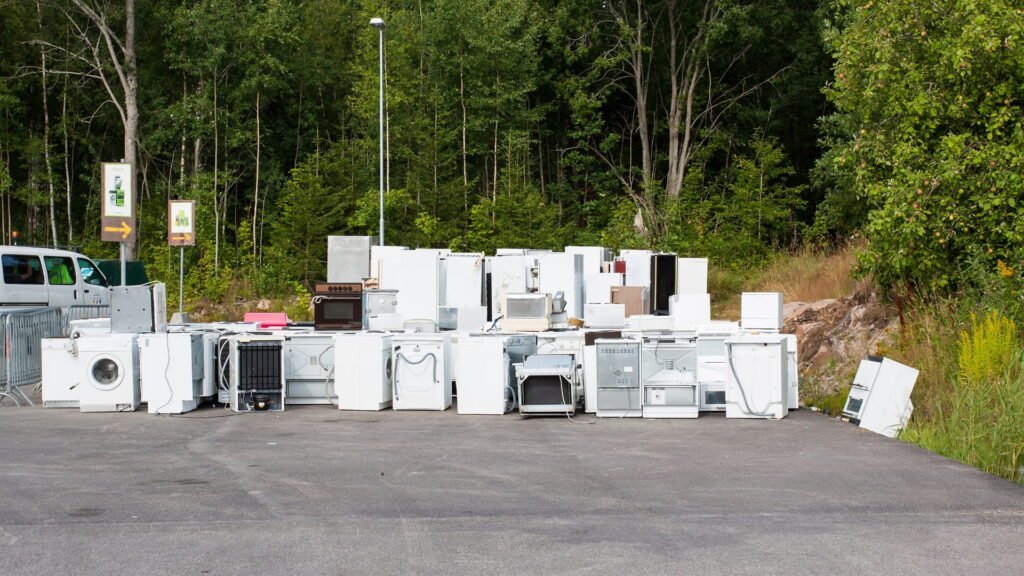
Refrigerators, washers, dryers, ranges, dishwashers, freezers, and air conditioners can be heavy, sharp, and connected to electricity, gas, water, drains, or refrigerant systems. Glenview Junk Crew reviews approved appliance removal Glenview IL requests after the unit is safely disconnected and ready to move.
Removal crews should not disconnect gas, hardwired electrical service, plumbing, refrigerant lines, or built-in appliances unless that work is specifically offered by a qualified and insured professional. Arrange the correct trade before the appointment. Cap or secure lines as required and confirm that no active utility remains connected.
Appliance weight is concentrated on a small footprint. The crew reviews floor transitions, stairs, turns, door widths, counters, railings, and the distance to the truck. Tell us about finished hardwood, delicate tile, narrow basement stairs, or a long carry. The safest method depends on the specific unit and route.
Metal appliances may have recycling value, but preparation and acceptance rules vary. Refrigerators, freezers, air conditioners, and dehumidifiers can contain refrigerants that require appropriate recovery. Electronics are also subject to Illinois handling requirements. We confirm the available route for the specific unit and do not promise that every appliance will follow the same process.
When a new appliance is being delivered, ask the retailer whether removal of the old unit is included, what condition is required, and whether stairs or disconnection cost extra. Municipal or utility programs may also accept certain units. Those options can be efficient when timing aligns and the appliance is already prepared.
Wall ovens, cooktops, dishwashers, under-counter equipment, walk-in components, and commercial machines can be fastened to cabinets, floors, utilities, or ventilation. They are not automatically included in an appliance pickup. A qualified trade may need to remove the unit from the building system before hauling begins. Heavy commercial equipment also requires verified weight and loading capacity.
The quote may reflect appliance type, dimensions, weight, refrigerant or processing requirements, floor level, stairs, door removal, disassembly, carrying distance, and quantity. Include model information for unusually large or commercial units.
Standard removal begins after safe disconnection.
Often, after the dimensions, stair route, weight, and door clearance are reviewed. Send photos from several angles.
Donation depends on age, cleanliness, working condition, recall status, transport requirements, and recipient capacity. It cannot be guaranteed. If a recipient has accepted the unit, provide written instructions.
Empty and prepare it before the appointment. Leaking or unsanitary units may require a different plan or be declined.
Send the appliance type, model, condition, utility status, floor level, and access photos. Call or text (872) 210-0670.
© 2026 Glenview Junk Crew. All Rights Reserved.